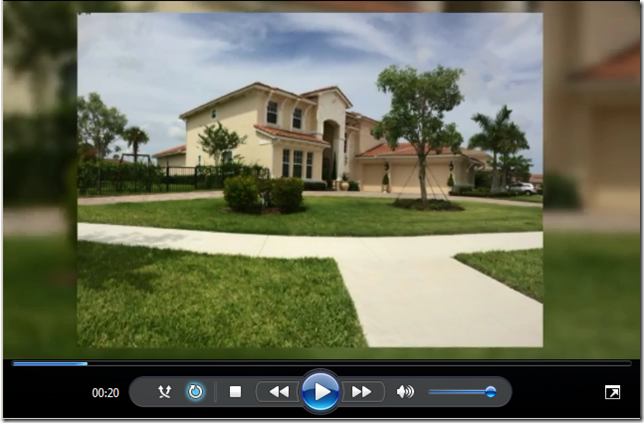
If you think your home should be marketed like this…please give me a call at 561.602.1258
or email me at email link
Thanks..Steve Jackson

If you think your home should be marketed like this…please give me a call at 561.602.1258
or email me at email link
Thanks..Steve Jackson


 This week I had a meeting to discuss the details of the launch of a new type of lease-option program for my clients. This is very exciting news for the thousands of people looking for a lease option the ability to lease option on almost any home that is for sale*.

What are the maximum concessions (Seller-paid costs) a buyer can receive from the seller, realtors, and other parties in a real estate transaction?
This is a great question we deal with all the time. There are so many buyers who need help with their cash for closing. Each program has different guidelines, so I will review the guidelines for the three more popular programs:
IF YOU WOULD LIKE TO TALK TO US ABOUT GETTING IN TO A HOME WITH LITTLE OR NONE OF YOUR OWN MONEY…GIVE ME A CALL.
Steve Jackson
561.602.1258
In October, the director of the Federal Housing Finance Agency announced that the regulator had reached a deal that would allow Fannie Mae and Freddie Mac to sign off on loans with down payments as low as 3%. Today, Fannie and Freddie revealed more details on what it would take for home buyers to be eligible for the reduced requirement, and getting one of these loans won’t be as easy as filling out a form.
In general, to qualify for the 3% down payment, at least one of the buyers taking out the loan must be a first-time buyer. There are also income requirements, and borrowers may need to attend home-buyer counseling in order to be eligible.
There are currently more details available about low down-payment mortgages backed by Fannie Mae, as they are becoming available to lenders immediately. Freddie Mac’s revised guidelines won’t go into effect until March 2015.
For the Fannie loans, borrowers can have credit scores as low as 620, but underwriters will be able to consider mitigating factors like low debt-to-income ratios. So if a borrower has a low credit score but owes little or nothing to creditors, that will be taken into account.
The Freddie offering determines eligibility partially based on the median income of the borrower’s area. If the borrower earns above that median income, they may not be able to get the lower down payment.
In all cases — just like in most mortgages where the borrower is putting down less than 20% — borrowers will be required to purchase mortgage insurance and make payments until the loan-to-value ratio reaches 80%.
Additionally, neither Fannie nor Freddie expect the 3% down payment loans to become wildly popular. Instead, the goal is to open up the hope of homeownership to people who can make mortgage payments but who lack the cash to make a 5% down payment.
Though Fannie and Freddie have been using 5% as the minimum for down-payments, the Federal Housing Agency has backed certain loans with as little as 3.5%. However, the costs associated with those loans have increased sharply in recent years.
[via WSJ.com]
If you believe that this type of loan may be what you need to get in to your own home…give me a call at 561.602.1258 or click here to email me
Thanks, Steve Jackson

Enjoy Your Thanksgiving!
May your holiday be joyful and may happiness surround it,
with good things on your table and those you love around it!
I sent an email to Congressman Deutch regarding passing an extension of the Mortgage Debt Forgiveness Act…below is the email I just received:
Thank you for contacting my office regarding H.R. 2788, the "Mortgage Forgiveness Tax Relief Act." Your views on this issue are very important to me, and I welcome the opportunity to respond.
As you are aware, the "Mortgage Forgiveness Tax Relief Act" would extend a tax provision that permits a taxpayer to exclude income from the discharge of debt on a home mortgage. The exclusion can be claimed for up to $2 million of forgiven debt. This provision is designed to protect homeowners who are subject to additional income taxes if they realize an increase in income due to a portion of their mortgage being forgiven on their home.
I strongly support protecting homeowners from possible tax increases should they realize an increase in income from a portion of their mortgage being forgiven. This bill has been referred to the House Ways and Means Committee, of which I am not a member. Please be assured that I will keep your views in mind should this issue be debated on the floor House of Representatives.
Please feel free to contact me with any additional questions you may have or anytime I may be of assistance to you.
If you would like to be updated on these and other issues, please stop by my website (www.deutch.house.gov) and sign up for my electronic newsletter. I hope you will find these tools to be valuable resources in keeping up with events in Washington and South Florida.
Sincerely,
Ted Deutch
Member of Congress
Hopefully Congress will get their act together and extend this bill before the end of their session so all of my Palm Beach County home sellers that are still underwater can move on with their lives in a dignified manner by means of a short sale.
Call me if you have any question (or shoot me an email)
Thanks…Steve Jackson…561.602.1258

Congress has begun its “Lame Duck” session with a big list of unfinished business items. Number 1 on my list is an extension of “The Mortgage Forgiveness Tax Relief Act.”
This bipartisan legislation would extend an expired provision that has helped millions of distressed American families (and dozens of our short sale clients) by allowing tax relief for homeowners when lenders forgive a portion of their mortgage debt.
Today’s housing market is finally recovering. However, there are still many homeowners unable to meet their mortgage obligations.
Estimates show that about 5.3 million homes are still under water. In addition, there are still more than 1 million homes in the process of foreclosure. Many of these over 6 million homeowners could greatly benefit from completing a short sale.
If “The Mortgage Forgiveness Tax Relief Act” is not enacted, hundreds of thousands of American families who did the right thing by short-selling their home or received a much needed loan reduction from their lender will have to pay income tax on “phantom income.” And millions more will not be afforded the opportunity to exit a very difficult situation with dignity.
Urge your Member of Congress and Senators to act on “The Mortgage Forgiveness Tax Relief Act” before the end of 2014 and help provide certainty for struggling homeowners and stability for our nation’s housing markets.
Click HERE for our Mortgage Debt Cancellation and Relief Q and A
Call me on my direct line if you have any questions regarding the above or if you’d like to meet so we can discuss your situation.
Steve Jackson 561.602.1258

Back in early to mid 2011 the market value of homes here bottomed out. Then several big hedge funds started scooping up everything under $300k…with ‘all cash’ offers. Home prices/values had been on quite a tear since…until recently.
What happens from here is difficult to predict. With the elections having just tilted back towards the Republicans we should quickly see if this translates into a more robust economy/jobs/business environment.
The current market may look like a ‘standoff’ between sellers and buyers.
But is not about standoffs, it’s about negative feedback loops and positive feedback loops:
Positive feedback loop: buy because prices are increasing, don’t put your house on sale because next year you can get 15 percent more. All of a sudden you have low inventory and rising prices, further feeding the loop.
Negative feedback loop: prices are stalling, let’s wait to see where they are in a year. Let’s sell that house now before prices fall further.
Let’s not forget, there is a lot of investor housing bought in the last 36 months that may quickly make it back on the market once the price gains stall out.
I’ll keep an eye on this…you keep an eye on this blog.
Thanks for reading…Steve Jackson…561.602.1258
 Anyone interested in buying a home should be familiar with one particular rite of passage: the down payment. Generally speaking, the more money you have to put down, the better your chances are of purchasing a mortgage.
Contrary to popular belief, a large down payment - traditionally speaking, 20 percent of the home's purchase price - isn't necessary to buy a home. In fact, there are several options that make it possible to buy a home with zero (or little money) down.
So if you don't have a large down payment saved up, keep reading to learn more about low down payment programs that could help make your homeownership dreams come true.
Are you having a hard time coming up with a large down payment for your first home or just don’t want use all of your savings? Then you might want to consider a low down payment mortgage backed by the FHA.
Designed mainly for first-time home buyers, FHA loans offer comparatively easy credit qualifications, low closing costs, and low down payments, according to HUD. Typically, FHA loans only require a 3.5 percent down payment. And many times you can get the seller to contribute towards your closing costs.
Recently, some lenders have relaxed their credit score requirements, approving FHA mortgages for home buyers with scores below 600.
Another advantage is its less strict guidelines on the home buyer's debt-to-income ratio, defined by HUD as "a comparison or ratio of gross income (before taxes) to housing and non-housing expenses. FHA is more flexible with the debt-to-income ratio. Generally speaking, applicants for an FHA loan should not have a mortgage payment and non-housing debts that exceed 41 percent of their gross income, notes HUD.
But for the FHA to be more forgiving in that regard, applicants typically must have strong compensating factors, including steady income and cash reserves after the loan purchase, according to Bates.
The major drawbacks of the FHA loan program are the requisite upfront mortgage insurance premium and monthly mortgage insurance payments that last the life of the loan.
Option #2: VA Loan
People with military backgrounds who are in the market for a new home could meet their down payment needs with the loan program sponsored by the U.S. Department of Veterans Affairs (VA). A VA Loan offers plenty of perks - most notably, ZERO down payment.
The VA loan program says homebuyers must be active service members, veterans, and eligible surviving spouses whose husbands or wives passed away due to service-related injuries.
A VA loan is appealing because it doesn't require mortgage insurance, and has lower interest rates compared to FHA and conventional loans.
Option #3: Down Payment Assistance Programs
If you can't rely on parents or relatives for help with your down payment, where else can you turn?
The answer might be found in down payment assistance programs. Down payment assistance programs usually have low down payment requirements, but in order to be approved, you will need to meet certain guidelines in regards to your income and credit.
He notes that down payment assistance programs generally are funded by state and county agencies, so he advises people to check with housing agencies in areas where they want to purchase a home.
If you think that one of these programs may be a good fit for you, please give me a call directly and we can see if the time is right for you to purchase a home.
Thanks for reading…Steve Jackson
561.602.1258
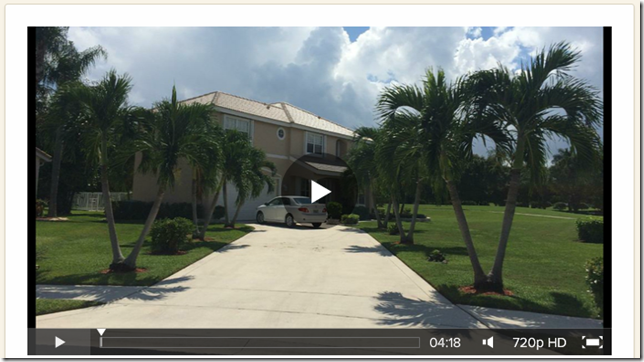
Our most recent property placed on the market. Located in Winston Trails, Lake Worth Florida
Unknown
Are you tired of the rules and restrictions of a homeowners association?
Do you have a boat, motor home, work trucks, etc. that you’d like to store at your home?
Would you like to have a big workshop next to your house?
Do your elderly parents need your help and watchful eye now?
Are the just-graduated kids moving back home?
We may have a great solution for you…we just signed an agreement to market a 1.4 acre piece of property a short distance from Winston Trails, Journeys End, Smith Farm, Lake Charleston and Lakeview Estates.
It is a heavily wooded, private parcel ready to be cleared and transformed. It is surrounded by other large parcels providing extra privacy.
We even can recommend a great, local, custom builder/engineer to help you with your plans and construction.
You can buy this property from us today for only $130,000! (Cash Only)
Call me today before we release this opportunity to the general public.
Steve Jackson: 561.602.1258
(Reuters) - Joseph and Neidin Henard thought they had finally fixed the mortgage that was crushing them.
In January, the couple reached a settlement with every company that had a stake in the mortgage on their house in Santa Cruz, California, a deal that would have slashed their monthly payment by almost 40 percent to $3,337. It was the end of a process that started with their defaulting in 2009.
But when they saw the final paperwork for their settlement, they found that Ocwen Financial Corp, the company that collected and processed their mortgage payments, had added an extra clause: they could not say or print or post anything negative about Ocwen, ever.
The Henards' experience was not unusual. Mortgage payment collectors at companies including Ocwen, Bank of America Corp and PNC Financial Services Group are agreeing to ease the terms of borrowers' underwater mortgages, but they are increasingly demanding that homeowners promise not to insult them publicly, consumer lawyers say. In many cases, they are demanding that homeowners' lawyers agree to the same terms. Sometimes, they even require borrowers to agree not to sue them again.
These clauses can hurt borrowers who later have problems with their mortgage collector by preventing them from complaining publicly about their difficulties or suing, lawyers said. If a collector, known as a servicer, makes an error, getting everything fixed can be a nightmare without litigation or public outcry.
A 2013 report by the National Consumer Law Center found that servicers routinely lost borrowers' paperwork, inaccurately input information, failed to send important letters to the correct address—or sometimes just didn't send them at all.
"If your servicer screws up, you can't say anything about it," said homeowner attorney Danielle Kelley in Tallahassee, Florida. "The homeowner has no defense."
Regulators are taking note. After Reuters' story was published on Wednesday, New York's Superintendent of Financial Services, Benjamin Lawsky, said he is investigating Ocwen's use of these clauses. A source familiar with Lawsky's thinking said that he could expand the probe to other servicers.
Gag orders and bans on suing are appearing when borrowers use litigation to settle foreclosure and loan modification cases. But they are also popping up when servicers modify loan terms outside of the courts, known as "ordinary loan modifications," according to consumer lawyers.
Bank of America doesn't include non-disparagement clauses and releases of claims in the course of ordinary loan modifications - just in ones involving negotiated legal settlements, spokesman Rick Simon said. Waivers don't preclude customers from filing suits on post-settlement issues, he said.
PNC's vice president of external communications, Marcey Zwiebel, said "these clauses are part of the consideration we receive for agreeing to settle the case. This helps to ensure that the discussion is not re-opened in public after the case has been settled."
Ocwen declined to comment, citing pending litigation.
Ocwen, Bank of America and PNC did not respond to requests for comment about Lawsky's investigation.
Bryce acknowledges that the language is ambiguous - under the waivers, homeowners often give up the right to sue on claims "whether existing now or to come into existence in the future."
The non-disparagement clauses are meant to protect banks from public insults from borrowers, which the lender can often not respond to without violating privacy laws, Bryce said.
Banks and servicers have been facing bad publicity along these lines for years, and while quantifying the impact of this bad-mouthing is difficult, few banks would choose to face it.
On a Facebook page devoted to denigrating Bank of America, one homeowner said, "They are without a doubt the worst organization I have ever dealt with. Keep suing them America! They deserve it!!"
JUST WANTING IT TO END
Clauses preventing future disparagement and lawsuits first started appearing after the housing crash, but they have grown more widespread in the last six months, said Ira Rheingold, executive director of the National Association of Consumer Advocates in Washington.
In January, the Consumer Financial Protection Bureau, a U.S. government agency, said it examined two servicers who were requiring homeowners to give up their right to sue as part of ordinary loan modifications. The CFPB said the practice was "unfair," and required the two servicers to cease the practice.
The agency also directed the servicers to stop enforcing existing waiver clauses and "to provide notice to the borrowers that it would not enforce these waivers in the future," according to a CFPB Supervisory Highlights bulletin. The agency didn't name the two servicers.
LOAN MODIFICATIONS
During the past few years, loan servicers have been renegotiating mortgage terms with borrowers who have fallen behind on their payments. Since the housing crash, there have been about 1.3 million loan modifications done under the government's Home Affordable Modification Program, according to the U.S. Department of Treasury. Servicers have done an additional 5.6 million modifications in-house.
Companies like Ocwen say that modifying mortgages is cheaper than foreclosing. Servicers modify mortgages through some combination of changing monthly payments or interest rates, lengthening the terms of loans, and changing the principal owed, either by forgiving some of the loan or by adding on penalties and fees to make it bigger.
The 2012 National Mortgage settlement, which covered Ally Financial Group, Bank of America, Citigroup Inc, JPMorgan Chase & Co and Wells Fargo & Co prohibited the use of waivers during the course of offering normal loan modifications—though it did allow for waivers in the event of litigation. Waivers were also forbidden under HAMP modifications.
That still leaves plenty of room for servicers to try to block borrowers from suing, or to use gag clauses.
Attorneys say the experience of the Henards was typical: the gag orders often pop up after borrowers think deal negotiations have been completed.
The Henards balked when they saw the Ocwen clause stating that they were to "not make any derogatory and/or disparaging comments about Ocwen or publish or discuss this Agreement or the settlement and compromise evidenced hereby on the internet or with the media."
"We are worried about them coming back against people in the future," said Dan Mulligan, the Henards' attorney. "It's just a risk you don't want to take." The Henards have about $680,000 outstanding on their mortgage.
Ocwen responded in court documents that the language was "standard boilerplate." The Henards haven't signed the non-disparagement clause. The issue is still being dealt with by the two sides' lawyers.
Consumer lawyers also object to being gagged themselves. Some lawyers challenge the banks to strike the language — or water it down. Attorneys also sometimes instruct their clients to fire them. That way, the homeowner can agree to the terms while the attorney doesn't have to.
"The banks are attempting to hold our clients hostage with a provision they know we cannot agree to," said University of Notre Dame law professor Judith Fox, who runs a clinic for troubled homeowners and who has also petitioned the Indiana Bar Association over attempts to muzzle attorneys. "It is coercive and unethical."
(Reporting by Michelle Conlin, Editing by Dan Wilchins and John Pickering)
UP TO THE MINUTE UPDATE: NEW YORK (Reuters) - Ocwen Financial Corp agrees to stop requiring some homeowners to not criticize the company publicly.

Someone who sold his or her home in a short sale or lost it in a foreclosure would normally have to wait 36 months to purchase a primary residence again with an FHA fixed-rate mortgage. However, the FHA Back to Work Program allows a buyer to purchase a primary home just 12 months after a foreclosure, short sale or a deed in lieu of foreclosure.
The program — which was announced in 2013, and extended through Sept. 30, 2016 — aims to fulfill a lofty goal: offering families a second chance at homeownership. The sticking point, however, is that you’ll need to specifically document the financial problems that caused you to forfeit your prior home in order to qualify.
How You Can Qualify
In order to qualify for the FHA Back to Work Program, you need to show that the loss of your previous home was truly due to circumstances beyond your control. Unfortunately, the program does not consider previous loan modifications, adjustable-rate loan recasting, inability to rent a previous income property, or even divorce to be sufficient enough reasons to qualify.
Loss of Income
You need to show a 20% loss of income or more for at least six consecutive months leading up to the event to qualify. For example, if the previous foreclosure, short sale or deed in lieu happened due to loss of income, you would meet this requirement if your pre-event income was $100,000, and dropped to $80,000 or lower for six consecutive months beforehand.
How to support your claim: The lender with whom you’re applying will order a verification of employment. The verification of employment would support the dates of when the loss of income occurred. Other supporting documentation would include lower year-to-date earnings with pay stubs within the dates your income dropped. W-2s and/or tax returns that show lower reported wages for that time frame will also meet the FHA requirement.
Full Recovery With Satisfactory Credit
The FHA wants you to demonstrate that you’re back on both feet. You’ll need to show that since the previous financial calamity, you have re-established your income and have paid your other obligations as agreed.
How to support your claim: You’ll need a credit score of at least 640 or have gone through a HUD-approved counseling agency related to homeownership and residential mortgage loans.
Tip: A 12-month favorable credit history on your other debt obligations would support the credit score requirement.
Missing the FHA Second-Chance Boat
These FHA requirements draw a clear line in the sand by asking for specific related documentation that led to the loss of the home. If a buyer who had a foreclosure, short sale or deed in lieu of foreclosure is unable to provide a clear, documented 20% loss of income for six consecutive months leading up to the event, it will be difficult for them to get qualified for this program. Here’s why:
The nature of lending in today’s credit environment involves revealing all aspects of the borrower’s credit, debt, income and assets. A simple letter of explanation detailing the events that led to the event is simply not enough; for this program, supporting documentation needs to corroborate the story.
Post-Foreclosure Timelines
If the short sale, foreclosure or deed in lieu of foreclosure took place within the last 12 to 36 months…
Then a documentable loss of income of 20% or more for six months remains in effect.
If the short sale, foreclosure or deed in lieu of foreclosure took place 36 months ago or longer…
Then the previous loss of income documentation threshold does not apply, and a borrower would be eligible for a new FHA loan, as long as the credit, debt, income and assets are acceptable with the lender. A previous house loss does not automatically preclude your ability to qualify.
If the short sale, foreclosure or deed in lieu of foreclosure took place 36 months ago or longer…
Then the lending requirements for other types of loans are as follows:
• Conventional loan – You’re eligible with 20% down (to avoid private mortgage insurance) seven years after the event, or three years after with documentable extenuating circumstances and a lender exception;
• VA loan – 36 months out from the date of the event;
• USDA loan — 36 months out from the date of the event;
• Jumbo mortgage (this is for loan amounts that exceed the maximum loan limit for a conventional loan in your area) — most lenders require seven years from a foreclosure or a deed in lieu, for a short sale they want 30% down and 36 months out or longer.
Thanks for reading…Steve Jackson, 561.602.1258
If you have gone through a short sale and are once again thinking that renting is losing it’s attractiveness and that it may be time to buy another home…give me a call and lets see what we can do.
First…the ACTUAL facts related to the current state of housing…


NEXT: Here is a sample of recent ‘upbeat’ housing related headlines:
As a seller or buyer, it’s difficult to know what to believe. Are prices rising? Is inventory low? Should you sell now or wait? Should you buy now or wait?
Here, in Palm Beach County, it looks like the market peaked in August, 2013 after a bottom in early 2011. An additional signal is the inventory levels have risen about 25% from the beginning of September 2013. Where is our local market headed this year? I think I know what the indicators are and where they are pointing.
My business has been built upon giving highly personalized advice based upon my client specific needs and goals. No one answer is right for all sellers or all buyers. And you can’t rely on the media to give you all of the ‘unbiased’ data and analysis required for you to make an educated decision.
If you are thinking about making a move, selling or buying, we should see what is the best thing for you to do, now. My direct line is 561.602.1258
Thanks for reading….Steve Jackson
Sorry to start out 2014 with a bad-news post…but writing about all sides of the real estate market is how I roll!
 On December 31, 2013, the Federal Housing Administration (FHA) reduced the loan limits for its single-family insurance program in 652 counties, while increasing them in 89 counties. The changes result from the expiration of provisions of the Economic Stimulus Act of 2008.
In Palm Beach County, the FHA loan limit for 2013 was $423,750…which meant that a buyer could obtain an FHA insured loan for $423,750. Typically, buyers choose the FHA loan route for 2 reasons: 1) they have little to no down payment, or, 2) their credit score would not enable them to obtain convention financing.
With an FHA loan, a buyer could purchase a home with as little as 3.5% down. On the aforementioned 2013 limit, that would have been a home sales price of about $439,000.
But starting now, the maximum loan amount for an FHA buyer is only $345,000! A $94,000 reduction…almost 20%! This new loan limit will translate into a new maximum purchase price of about $358,000.
Lets look at what effect these new limits would have had if we overlay the 2014 limits on to 2103 loans.
In 2013, there were 2301 FHA home sales (about 5% of the total sales) reported in MLS statistics. Of those 2301, 127 of them fell above the 2014 limits. This doesn’t necessarily mean that those 127 sales would not have happened in 2014 limits were in place, but in my 15+ years of experience I have found that the great majority of FHA buyers do not have much money for the down payment and that is why they pay the higher fees and higher interest rates associated with FHA as FHA is about the only game in town for this type of buyer.
So lets assume that 20% of those FHA buyers could have financed the loan another way…that leaves 100 sales between $357,000 and $439,000 that would not have been possible (or will not be possible this year). No matter how you interpret it, losing 5% of your prospective buyer pool is not good for home sellers in 2014.
Another interesting and potentially impactful statistic: in 2013 there were 767 all cash sales in the $357k-$439k range. This equates to 43% being cash sales. The all cash sale market is expected to contract again this year as investors/hedge funds continue to scale back on purchases as prices have risen 25% or more since the bottom in mid 2011.
All-in-all, I foresee a tightening of the real estate market going forward this year. I am of the opinion that sales prices will be flat-to-negative. But on the flip side…for the (non FHA) buyer, buying sooner rather than waiting will be advice I will be comfortable giving seeing as how interest rates are expected to continue climbing (with the next ‘taper’ on the horizon) and underwriting rules are going to be getting tougher.
If you’d like to discuss your options as a seller or buyer in this market give me a call at 561.602.1258
Thanks for reading, Steve Jackson
And come to visit us in our new office (We are now a REMAX franchise). we’re located on the SW corner of Hypoluxo and Jog in the Charleston Square Plaza. 6582 Hypoluxo Rd., Lake Worth 33467

Below is a blog post from Charles Hugh Smith’s blog: OfTwoMinds.com
I couldn’t comment or paraphrase anything in his post that would be an improvement or would add any clarity…so the verbatim post is below. You should add his blog to your daily reading list.

Janet Yellen's role as the nation's slumlord is masked by her apparent distance from the Fed's money spigot and the resulting institutional ownership of the nation's rental housing stock.
Please welcome the nation's new chief slumlord, Janet Yellen. The previous top slumlord, Ben Bernanke, has retired from the position of Chief Slumlord (i.e. chair of the Federal Reserve) to the accolades of those who benefited from his extraordinary transfer of wealth from the many to the few.
Why is the chairperson of the Fed the nation's top slumlord? Allow me to explain.We only need to understand two facts to understand the Fed's role as Slumlord.
1. Rental housing has long been a decentralized, locally owned industry. Over 90% of rental properties under 50 units have historically been owned by individuals or couples: the nation's landlords have historically been Mom and Pop, middle-class folks who saved capital and used those savings to buy a single-family home or small apartment building (duplex, triplex, four-plex) as an investment that they own and manage.
Very few amass a huge portfolio of properties, as few have the income or assets (i.e. the collateral) to leverage the purchase of dozens of rental properties.
Buildings up to four units qualify for conventional mortgages; small rental properties are not considered commercial properties like strip malls or large apartment complexes.
This diverse, local ownership provided a wide spectrum of residential rentals. The wider the variety of rentals and owners, the greater the diversity of prices, locales and requirements. This is the essence of free enterprise: sellers (landlords) and buyers (renters) agree to price and conditions in a dynamic, open and adaptive marketplace.
2. No Mom and Pop real estate investor can compete with financial institutions who can borrow unlimited sums of money from the Federal Reserve at near-zero rates of interest.
Let's start by asking what happens to the price of real estate when mortgages fall from 8% interest to 4%: prices basically double, because buyers can "afford" to pay more at low rates of interest.
When conventional mortgage rates are 8%, a rental that costs $200,000 requires a 30% down payment in cash (because the buyers are not owner-occupants) or $60,000. The simple interest on a $140,000 mortgage is about $11,200 annually. (Let's use simple annual interest for simplicity's sake.)
At 4%, the price can double to $400,000, with a 30% down of $120,000 and a mortgage of $280,000, and the mortgage accrues the same $11,200 in annual interest.
Declining interest rates push real estate prices higher.
At first glance, this doubling in price doesn't seem to affect the cost of ownership. But that is deceptive; consider how many households can scrape up $120,000 in cash compared to the number who can scrape up $60,000. The higher the price, the bigger the down payment required. The higher the down payment, the fewer the number of households who can accumulate that much cash.
To households that live paycheck-to-paycheck, both sums are out of reach. But a significant number of middle class households could accumulate $60,000: such a sum could come from a family house that was sold and divided amongst the offspring, for example, or a Solo 401K that allows the retirement fund to own real estate, or from saving $5,000 a year for 12 years.
The Federal Reserve's Zero Interest Rate Policy (ZIRP) was designed to push real estate prices higher. The Fed's public justification was "the wealth effect": the idea was that as the family home increased in value, homeowners would begin to borrow and spend more money due to their increased home equity.
The second Fed goal was to increase home sales by lowering mortgage rates, theoretically enabling more marginal buyers to buy a home. But since prices rise as mortgage rates drop, this goal is mooted unless marginal buyers are also given a free ride on down payments and qualifying income, i.e. offered near-zero down payments and no-document mortgage qualification processes.
But zero interest rates and unlimited liquidity don't just push real estate prices higher--they give institutions with access to the Fed's nearly-free money an unbeatable advantage over Mom and Pop real estate investors.
Imagine being able to borrow $400,000 at 1% with zero collateral. You can now buy the rental property for cash, and pay only $4,000 in simple annual interest. And you didn't have to put up a dollar of actual collateral to buy the property.
Consider the huge advantages you now have over the competing Mom and Pop bidders. Sellers typically prefer cash offers, so your cash offer (of Fed money) is more attractive than Mom and Pop's loan-based bid.
If the price jumps to $500,000, Mom and Pop are blown out of the water: they don't have the additional $30,000 cash required as collateral.
Thanks to the Fed, you don't need any collateral. You can borrow $500,000 as easily as $400,000, and the increase in annual interest is trivial: a mere $1,000.
Now consider the operating costs: you have a $7,000 annual advantage because you have access to the Fed's nearly-free money. Mom and Pop have to pay $11,200 in simple annual interest, while you pay only $4,000. A property that is break-even to Mom and Pop reaps you a $7,000 annual profit, just because you can borrow money from the Fed for next to nothing.
Now multiply the $400,000 and the $7,000 by 1,000. Now you can buy $400,000,000 of rental properties and skim $7,000,000 in annual profits, just from the advantage of having access to the Fed's quantitative easing (QE) nearly-free money.
Any advantages you can accrue from economies of scale from owning tens of thousands of rental properties are also yours to keep, courtesy of the Fed.
Now you understand why Janet Yellen is the nation's new top slumlord. Her policies of unlimited liquidity, QE and zero interest rates directly enable financial Elites to beat out Mom and Pop rental housing investors and buy tens of thousands of rental properties at will.
Access to free money and near-zero interest rates gives institutional buyers a built-in advantage over Mom and Pop rental property owners: no collateral and free profits from super-low rates available to those closest to the Fed's QE money spigot.
Institutional ownership turns the rental housing stock into a Fed-enabled financial monoculture. Individual Mom and Pop owners may not require a credit check, or they might not raise the rents very often; the odds that you will be treated as a human being are higher because the scale of the operation is small and local.
To Fed-enabled Institutional landlords, you are an income stream to be skimmed.You will be processed and managed remotely, and variations are not allowed, as they mess up the profit machine.
Fed-enabled Institutional landlords may or may not hire competent, responsive managerial firms to manage their thousands of properties: from the point of view of Fed-enabled Institutional landlords, the lower the costs, the larger the profits. One way to lower costs is to not respond to tenant complaints or requests for service. Another is to hire the lowest-cost (and likely understaffed) management firm.
Janet Yellen's role as the nation's slumlord is masked by her apparent distance from the Fed's money spigot and the resulting institutional ownership of the nation's rental housing stock. But guess what, Chairperson Yellen: we're not fooled. Your phony facade of "progressivism" doesn't mask your real role as the nation's top slumlord.
 On December 31, 2013 The Mortgage Debt Relief Act of 2007 expired! Without an extension, homeowners who have any amount of a mortgage forgiven by a lender either in a short sale or foreclosure would be subject to paying “phantom income tax” on the amount of the forgiveness. Homeowners shouldn’t be forced to pay tax on money they’ve already lost with cash they never received – and never will receive. That’s crazy…don’t you think?
Current U.S. Senate Legislation: S. 1187 the “Mortgage Forgiveness Tax Relief Act” introduced on June 19, 2013 by Senators Stabenow (D-MI), Menendez (D-NJ) Isakson (R-GA) and Heller (R-NV).
Current U.S. House Legislation: H.R.2994 “Mortgage Forgiveness Tax Relief Act of 2013” introduced on August 2, 2013 by Congressmen Reed (R-NY) and Rangel (D-NY)
NAR has aggressively sought co-sponsors for both the House and Senate bills, currently 19 Senators have cosponsored S.1187 and 48 Members of Congress have cosponsored H.R.2994
Where it stands today, House: The United States House of Representatives adjourned the first session of the 113th Congress without taking action on H.R. 2994.
Where it stands - Senate: On December 19, 2013, Senator Debbie Stabenow (D-MI) conducted a discussion, known as a colloquy, with a number of colleagues on the Senate Floor to underscore the importance of passing this legislation. After the colloquy concluded, Senate Majority Leader Harry Reid (D-NV) came to the floor to request Unanimous Consent to bring up and pass a number of expiring tax provisions, including Mortgage Cancellation. Under Senate rules only one Senator has to object to stop the process, and Senator Reid’s request was objected to. Senator Reid then announced his intention to work with Republicans to pass a tax extenders bill – including mortgage cancellation, early in 2014 that would be retroactive. A few days ago, Senate Finance Committee Chairman Max Baucus (D-MT) also expressed his intention to move the bill, along with a limited number of other tax provisions early in 2014.
So…if you’ve waited to move forward with a short sale on your home, keep reading here for the latest update or feel free to call me any time at 561.602.1258
Happy/Healthy New Year…and thanks for reading.
Steve Jackson